
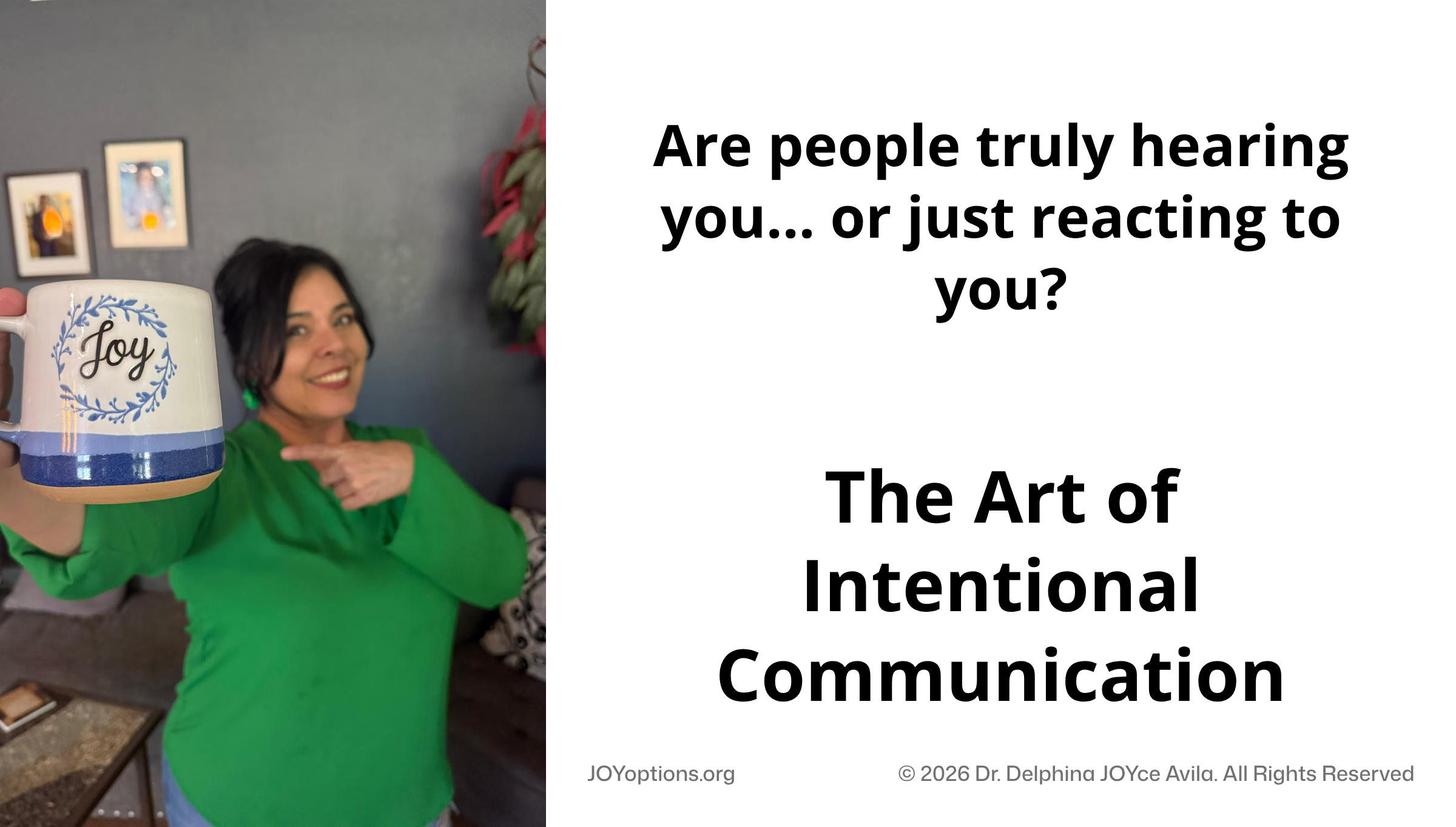
Have you ever felt like your words were building walls instead of bridges—despite your best intentions?
For many high-achieving leaders, communication is assumed to be a strength. Leadership demands presenting ideas, articulating vision, and motivating people.
But a deeper leadership question often goes unasked:
Are people truly hearing you… or simply reacting to you?
That question became a defining turning point in my own leadership journey.
When Achievement Outpaced Connection
Earlier in my career, I believed leadership was primarily about strategy, results, and performance.
I worked relentlessly.
I produced outcomes.
I communicated vision with clarity.
Yet something unexpected kept happening.
Conversations intended to inspire sometimes created resistance.
Feedback meant to help occasionally discouraged others.
Meetings filled with ideas ended without alignment.
Despite my best intentions, I realized that my words sometimes built walls instead of bridges.
It was frustrating—not because I lacked knowledge, but because I cared deeply about people and purpose.
Eventually, I learned something that reshaped my leadership approach:
Communication is not merely about words.
It is about the mindset behind them.
The Leadership Shift: Communication as Mindset
Intentional communication is not simply a professional skill.
It is a self-leadership discipline.
Leadership research consistently demonstrates that trust, emotional intelligence, and communication behaviors strongly influence workplace performance and team cohesion.¹
This insight aligns deeply with the JOY Mindset® framework, which emphasizes that leadership transformation begins internally before it is expressed externally.
When leaders cultivate awareness across Spirit, Mind, Heart, and Body, communication begins to shift naturally.
| Dimension | Communication Impact |
|---|---|
| Spirit | Purpose-driven conversations |
| Mind | Clear thinking and intentional messaging |
| Heart | Empathy and emotional intelligence |
| Body | Presence, tone, and energy |
Communication improves not because leaders memorize scripts, but because they show up differently.
Why Miscommunication Happens (Even Among Successful Leaders)
Communication breakdowns rarely occur because people lack intelligence or expertise.
Research highlights several consistent causes.
1. Assumption Bias
Leaders often assume others understand context that has never been clearly articulated.
2. Speed Over Reflection
High performers tend to communicate quickly. Intentional leaders communicate thoughtfully.
3. Emotional Filtering
Listeners interpret messages through their own experiences, expectations, and concerns.
4. The Listening Gap
Leadership scholars consistently emphasize that effective listening is one of the most critical but underdeveloped leadership skills, directly influencing trust and engagement within teams.²
Research on workplace communication also demonstrates that employees who feel heard show stronger commitment, collaboration, and productivity.³
The implication is clear:
Communication failures are rarely about competence.
They are about awareness.
My Personal Turning Point
One moment in my leadership journey changed everything.
I had just finished presenting a strategic initiative I believed was compelling and clear.
After the meeting, a colleague approached me quietly and said something that stayed with me:
“Your vision is powerful—but people are struggling to see where they fit in it.”
That moment forced me to reconsider how I communicated.
I had been communicating from clarity, but not always from connection.
From that point forward, I committed myself to learning the art of intentional communication.
Five Practices That Transform Communication
Over time, I developed several daily practices that changed how I lead and connect.
1. Pause Before Speaking
Intentional leaders create space between thought and response.
That pause allows us to ask:
- What outcome do I want from this conversation?
- What might the other person need to hear?
Even a brief pause changes tone, clarity, and emotional impact.
2. Listen to Understand, Not to Respond
Listening is not waiting for your turn to speak.
It is actively engaging with meaning.
Studies in communication psychology show that active listening significantly improves relational trust and perceived leadership effectiveness.⁴
3. Speak with Alignment
Authentic communication emerges when words align with purpose and values.
This is where the L.E.A.D. with JOY framework becomes powerful:
- Live Your Values
- Embrace Resilience
- Align Wellness & Work
- Decide with Intention
Intentional communication becomes a natural outcome of aligned leadership.
4. Invite Dialogue, Not Compliance
Leadership conversations should not be monologues.
Ask questions such as:
- What are you seeing from your perspective?
- What concerns should we address?
- How can we move forward together?
Dialogue transforms communication from authority to partnership.
Scholars of leadership communication emphasize that dialogic communication strengthens shared meaning and collaborative decision-making.⁵
5. Communicate with JOY Energy™
Within the JOY Energy-in-Motion system™, communication integrates building blocks of emotional wellness.

These behaviors strengthen neural integration and support reflective decision-making, reinforcing Sustainable JOY™ leadership.
Signs Your Communication May Be Building Walls
Consider reflecting on these questions:
- Do conversations end with confusion rather than clarity?
- Do people hesitate to offer honest feedback?
- Do meetings feel productive but results stall afterward?
These are not failures.
They are signals that communication alignment needs attention.
What Happens When Communication Becomes Intentional
When leaders shift their communication mindset, something powerful happens.
Teams begin to:
- Speak openly
- Resolve conflicts more quickly
- Align around shared purpose
- Build stronger trust with leadership
Research in organizational behavior consistently shows that high-trust communication environments significantly increase collaboration, innovation, and performance outcomes.¹
This is the power of intentional communication.
It is how leaders build bridges instead of walls.
Your Next Step-ACTIVATE JOY
Intentional communication begins with self-awareness.
If you want to understand how your leadership behaviors align with the JOY Mindset® framework, explore the JOY Mindset® Assessment.
👉 https://joyoptions.org/joy-mindset-assessment/
This assessment helps leaders evaluate their engagement across Spirit, Mind, Heart, and Body, providing insight into the habits and mindset patterns that shape leadership impact.
Closing Reflection
Words have extraordinary power.
They can divide—or unite.
They can discourage—or inspire.
The difference is not vocabulary.
The difference is intention.
When communication becomes intentional, leadership becomes transformational.
And that is where authentic JOY begins.
References
Bass, Bernard M., and Ronald E. Riggio. Transformational Leadership. 2nd ed. Mahwah, NJ: Lawrence Erlbaum Associates, 2006.
Bodie, Graham D. “The Active-Empathic Listening Scale (AELS): Conceptualization and Evidence of Validity Within the Interpersonal Domain.” Communication Quarterly 59, no. 3 (2011): 277–295.
Edmondson, Amy C. The Fearless Organization: Creating Psychological Safety in the Workplace for Learning, Innovation, and Growth. Hoboken, NJ: Wiley, 2019.
Glaser, Judith E. Conversational Intelligence: How Great Leaders Build Trust and Get Extraordinary Results. New York: Routledge, 2014.
Goleman, Daniel, Richard Boyatzis, and Annie McKee. Primal Leadership: Unleashing the Power of Emotional Intelligence. Boston: Harvard Business School Press, 2013.
Hill, Linda A., Greg Brandeau, Emily Truelove, and Kent Lineback. Collective Genius: The Art and Practice of Leading Innovation. Boston: Harvard Business Review Press, 2014.
Mumby, Dennis K., and Robin P. Clair. “Organizational Discourse.” In The Handbook of Organizational Studies, edited by Stewart R. Clegg, Cynthia Hardy, and Walter R. Nord, 181–205. London: Sage Publications, 1996.
Rosenberg, Marshall B. Nonviolent Communication: A Language of Life. 3rd ed. Encinitas, CA: PuddleDancer Press, 2015.
Schein, Edgar H., and Peter A. Schein. Humble Leadership: The Power of Relationships, Openness, and Trust. Oakland: Berrett-Koehler Publishers, 2018.
Weick, Karl E. Sensemaking in Organizations. Thousand Oaks, CA: Sage Publications, 1995.
Zak, Paul J. “The Neuroscience of Trust.” Harvard Business Review 95, no. 1 (2017): 84–90.
JOYoptions.org
#drdelphinajoy #LEADwithJOY #SHINEwithJOY #MessengerofJOY #JOYMindset®